
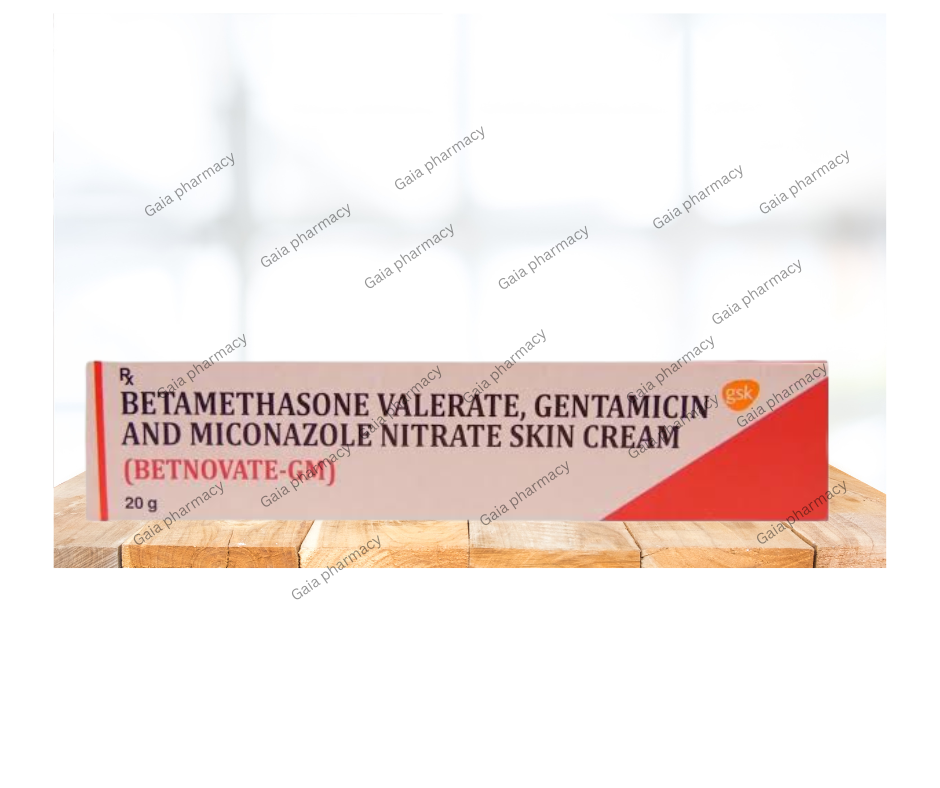

Betamethasone 0.1% + Gentamicin 0.1% + Miconazole 2%
$41.00Price
This Cream is a combination of two different medicines. It is used in the treatment of bacterial and fungal infections of the skin
Betamethasone 0.1% + Gentamicin 0.1% + Miconazole 2% Cream is a combination topical medicine used for certain inflammatory skin conditions associated with susceptible bacterial and fungal infections. Betamethasone reduces inflammation and itching, gentamicin treats susceptible bacteria, and miconazole acts against susceptible fungi.
This combination cream contains three active ingredients: betamethasone, a corticosteroid; gentamicin, an aminoglycoside antibiotic; and miconazole nitrate, an antifungal medicine.
The ingredients work in different ways to reduce skin inflammation and treat susceptible bacterial and fungal organisms. Because the cream contains a corticosteroid and an antibiotic, it should be used only for conditions for which a healthcare professional considers the combination appropriate.
Betamethasone 0.1% + Gentamicin 0.1% + Miconazole 2% Cream may be prescribed to:
Treat certain inflammatory skin conditions associated with susceptible bacterial and fungal infections.
Reduce redness, swelling and itching associated with a suitable steroid-responsive skin condition.
Treat susceptible fungal skin infections when accompanied by inflammation and a bacterial infection requiring antibiotic treatment.
The appropriate treatment and duration of use should be determined by a healthcare professional after assessing the skin condition and the organisms involved.
Each ingredient has a different role:
Betamethasone reduces inflammation, redness and itching by suppressing inflammatory responses in the skin.
Gentamicin is an antibiotic that interferes with bacterial protein production, helping kill susceptible bacteria.
Miconazole is an antifungal that interferes with fungal cell membrane function, helping control susceptible fungal infections.
The combination may improve inflammatory symptoms while treating susceptible organisms, but it is not appropriate for every rash or skin infection.
Apply Betamethasone + Gentamicin + Miconazole exactly as prescribed by your healthcare professional.
Application: Apply only to the affected skin area and use the amount directed by your healthcare professional.
Frequency and duration: Follow the prescribed schedule. Prolonged or repeated use can increase the risk of side effects, including skin thinning.
External use: Do not swallow the cream. Avoid contact with the eyes and other sensitive areas unless specifically directed by a healthcare professional.
Application area: Do not apply to the face, skin folds, broken skin or large areas unless your healthcare professional specifically advises it.
Dressings: Do not cover the treated area with airtight dressings unless instructed by your healthcare professional.
Treatment changes: Do not extend, repeat or change treatment without professional advice.
If the condition worsens, spreads or does not improve as expected, seek medical advice rather than continuing to use the cream.
Tell your doctor or pharmacist about your medical history, allergies, and all medicines, supplements and herbal products you use before starting treatment.
Use particular caution if you:
Have an allergy to betamethasone, gentamicin, miconazole or any other ingredient in the cream.
Have kidney problems, particularly if the cream may be used over large areas or for an extended period.
Have acne, rosacea, perioral dermatitis or a viral skin infection, as this combination may be inappropriate for these conditions.
Have psoriasis or damaged skin, which may require careful medical supervision.
Are considering applying the cream to the face, eyelids, genital area or other sensitive skin.
Are treating a child, because children may absorb more topical corticosteroid through the skin and may be more susceptible to adverse effects.
Possible medicine interactions include:
Warfarin and other vitamin K antagonist anticoagulants: Miconazole may increase anticoagulant effects, so monitoring may be needed.
Medicines that inhibit CYP3A4, such as ritonavir or itraconazole: these may increase systemic exposure to corticosteroids.
Other aminoglycoside antibiotics: Concurrent use may increase the risk of cumulative toxicity if significant absorption occurs.
Although absorption through the skin is generally limited, interactions can still matter in some circumstances. Check potential interactions with your doctor or pharmacist before using the cream.
If you are pregnant, planning a pregnancy or breastfeeding, consult your doctor before using Betamethasone + Gentamicin + Miconazole Cream.
The product information for this specific combination does not recommend its use during pregnancy or breastfeeding. This is due to potential concerns associated with the ingredients and limited evidence about their use together in these circumstances.
Your healthcare professional can assess the potential benefits and risks and consider an appropriate alternative if needed.
Like all medicines, Betamethasone + Gentamicin + Miconazole can cause side effects, although not everyone experiences them.
Possible side effects include:
Itching or burning at the application site
Local skin irritation or discomfort
Redness or a skin rash
Skin thinning or changes in skin colour, particularly with prolonged use
Worsening or spreading of the underlying infection if inflammation is suppressed without adequately treating the infection
Stop using the cream and seek prompt medical attention if you develop severe swelling, difficulty breathing, a widespread or blistering rash, or signs that the infection is spreading rapidly.
This is not a complete list of side effects or warnings. Please refer to the product packaging and patient information leaflet supplied with your medicine for complete information and speak with your doctor or pharmacist if you have concerns.
Store Betamethasone + Gentamicin + Miconazole according to the instructions shown on the original product packaging.
Keep the cream in its original packaging.
Protect it from excessive heat and unsuitable storage conditions.
Do not freeze unless the product information specifically states otherwise; follow the supplied instructions.
Keep out of reach of children.
Do not use the cream after its expiry date.
For products with the same formulation as the cited manufacturer information, storage below 25°C is specified; confirm the requirements for your particular product.
It may be prescribed for certain inflammatory skin conditions associated with susceptible bacterial and fungal infections. A healthcare professional should confirm that this combination is appropriate for the specific skin condition.
Betamethasone reduces inflammation and itching, gentamicin treats susceptible bacterial infections, and miconazole treats susceptible fungal infections. Each ingredient targets a different aspect of the condition.
The time needed for improvement depends on the skin condition, the organisms involved and the severity of inflammation. Seek medical advice if symptoms worsen or fail to improve within the period specified by your healthcare professional.
Do not apply it to your face unless specifically directed by a healthcare professional. Facial skin is more susceptible to corticosteroid-related side effects, including skin thinning.
No. The presence of a corticosteroid and antibiotic means the combination is not appropriate for every fungal infection or rash. Using it for an unsuitable condition may mask symptoms or allow an infection to worsen.
The product information for this combination does not recommend its use during pregnancy or breastfeeding. Consult your doctor to discuss the potential risks and suitable alternatives.
Do not extend or repeat treatment without medical advice. Prolonged use can increase the risk of skin thinning, other corticosteroid-related effects and worsening or masked infections.